
Lalibela
Churches carved down into the rock. In the Ethiopian highlands, eleven medieval churches were carved downward out of solid rock. Lalibela is still a living place of pilgrimage.
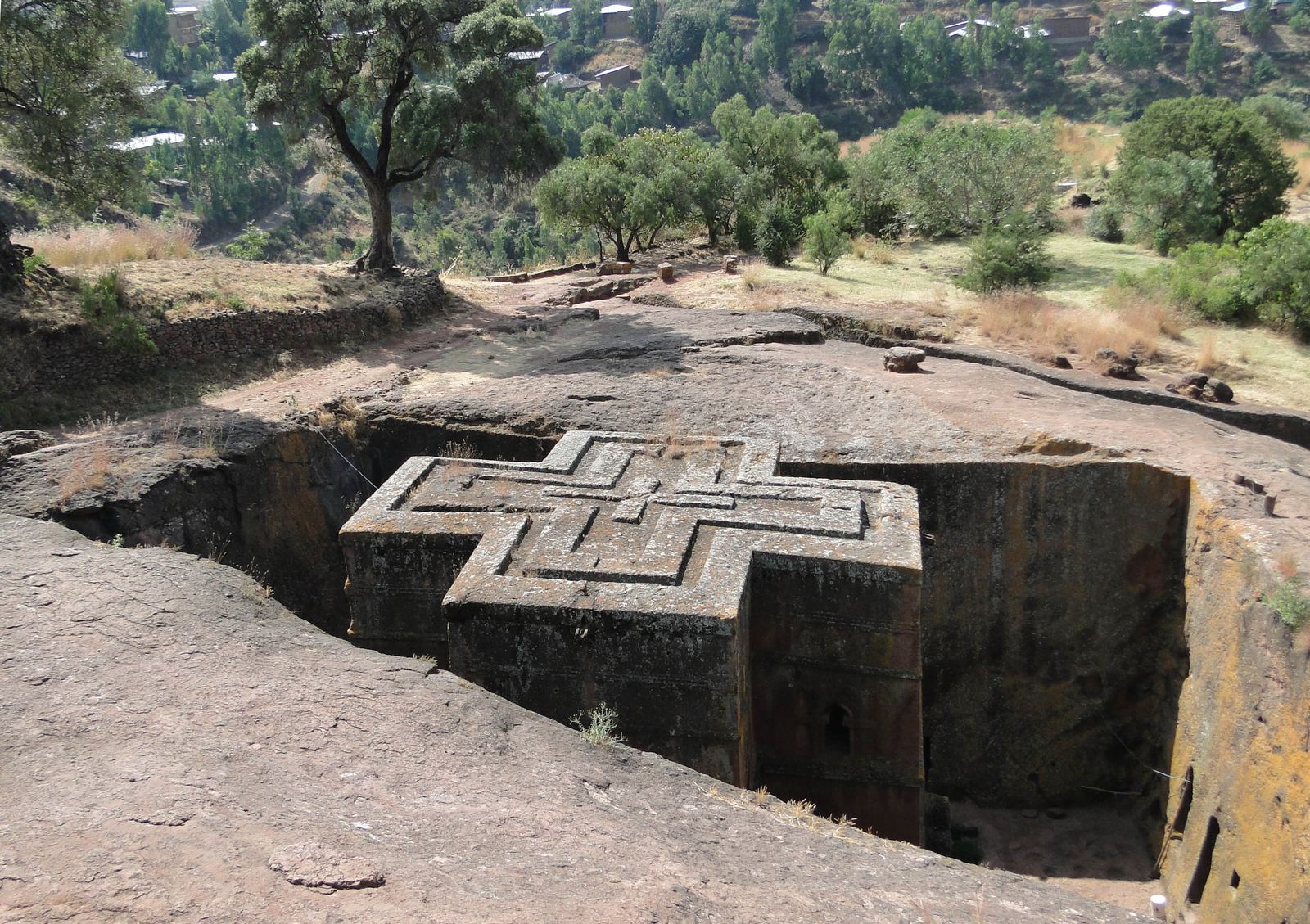
Bete Giyorgis, Lalibela: Bernard Gagnon, CC BY-SA 3.0
Building by taking away
Most buildings rise from the ground. The churches of Lalibela go the other way. Stonecutters working in the highlands of northern Ethiopia dug trenches deep into soft red volcanic rock, then shaped the block left in the middle into a complete church, carving out doors, windows, columns and roofs from a single mass of stone. Inside, they hollowed rooms, arches and chapels.
Eleven churches survive in and around the town, linked by trenches, tunnels and narrow passages. The best known, Bete Giyorgis, the Church of Saint George, stands alone in a pit about 12 metres deep, its roof carved in the shape of a cross.
Video: Rock-Hewn Churches, Lalibela (UNESCO/NHK) (UNESCO), embedded from YouTube.
A king's New Jerusalem
Tradition credits the churches to King Gebre Meskel Lalibela of the Zagwe dynasty, who ruled in the late 12th and early 13th centuries. Ethiopian Christianity dates back to the kingdom of Aksum in the 4th century, and pilgrimage to Jerusalem was difficult in this period. Lalibela is often described as a New Jerusalem, and features of the landscape carry biblical names, including a channel called the Jordan.
Historians think some of the structures may be older or were reworked over time, but the town has carried the king's name for centuries. Before that, the settlement was known as Roha.
The churches are grouped into two main clusters on either side of the Jordan channel, with Bete Giyorgis set apart to the west. Inside several of them, wall paintings, carved crosses and old wooden doors survive, and some still hold processional crosses believed to date from the founding era.
A living holy place
Lalibela is not a museum. Priests of the Ethiopian Orthodox Tewahedo Church hold services daily, guard painted manuscripts and processional crosses, and lead chants in Ge'ez, the church's ancient liturgical language. At Genna, the Ethiopian Christmas on 7 January, many thousands of pilgrims dressed in white fill the trenches and rock ledges for all-night prayers.
Protecting the rock
The soft stone that made the carving possible also makes it fragile. Rain, cracks and the weight of visitors wear it down, and large protective roofs have covered several churches since the 2000s. Lalibela was among the first places listed as a UNESCO World Heritage Site in 1978. Conservation work continues, with local clergy and residents central to the care of a site that remains the spiritual heart of the town.
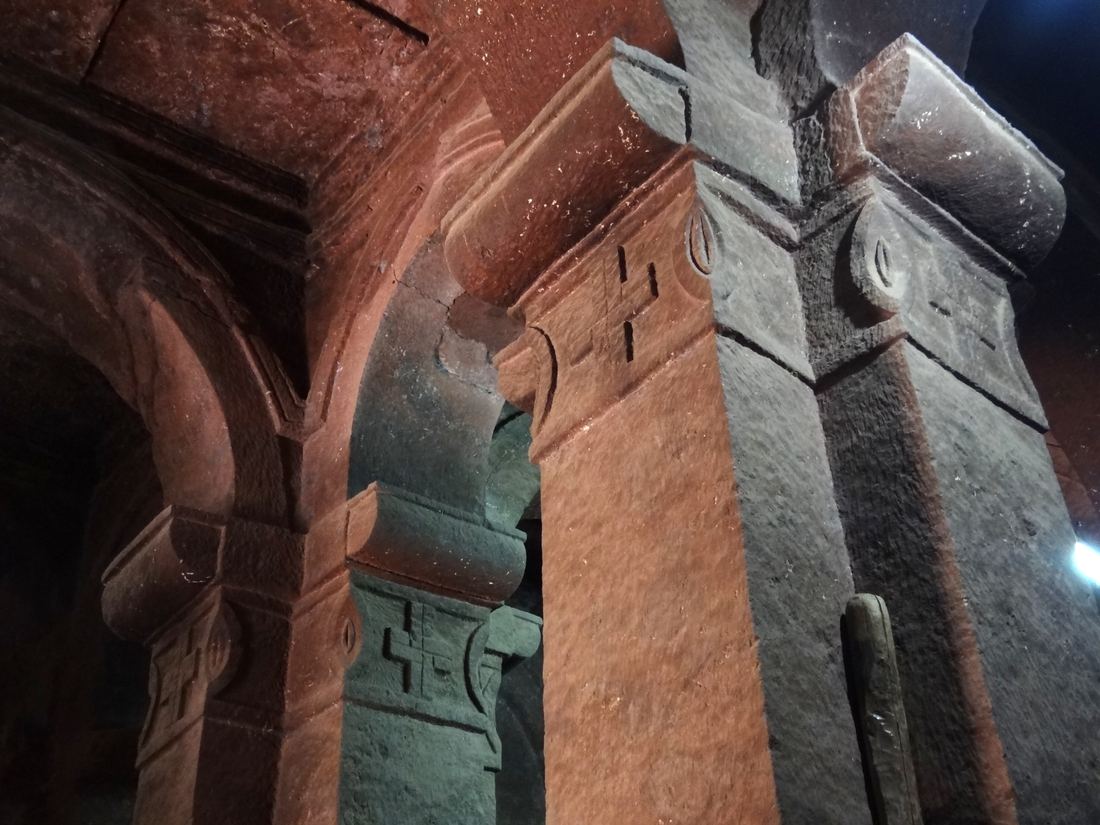
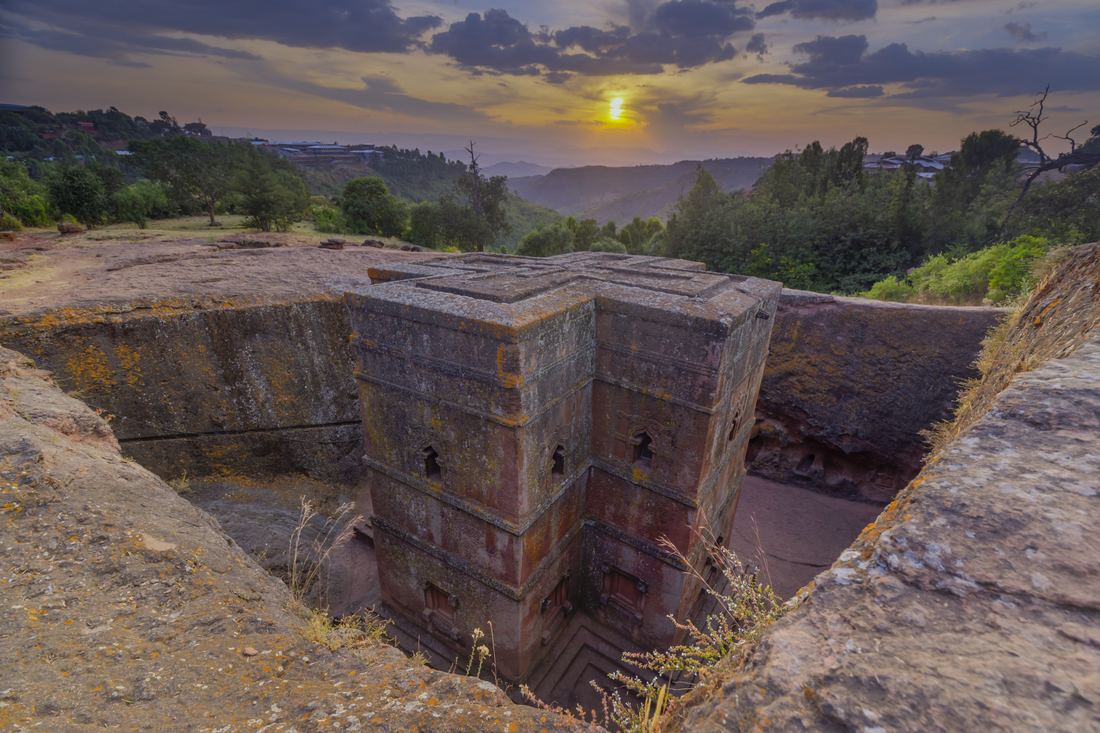
- Bete Giyorgis, Lalibela: Bernard Gagnon, CC BY-SA 3.0
- Inside Bet Debre Sina: Adam Jones from Kelowna, BC, Canada, CC BY-SA 2.0
- Saint George at sunset: Thomas Fuhrmann, CC BY-SA 4.0
Text written by Bongara Bongara.






_Rock-Hewn_Church_-_Lalibela_-_Ethiopia_-_01_(8724852519).jpg)
