Mount Kilimanjaro
Africa's highest peak. Kilimanjaro, at 5,895 m, is Africa's highest mountain and the world's tallest free-standing one. Its volcanic cones, climate zones and climbing safely.
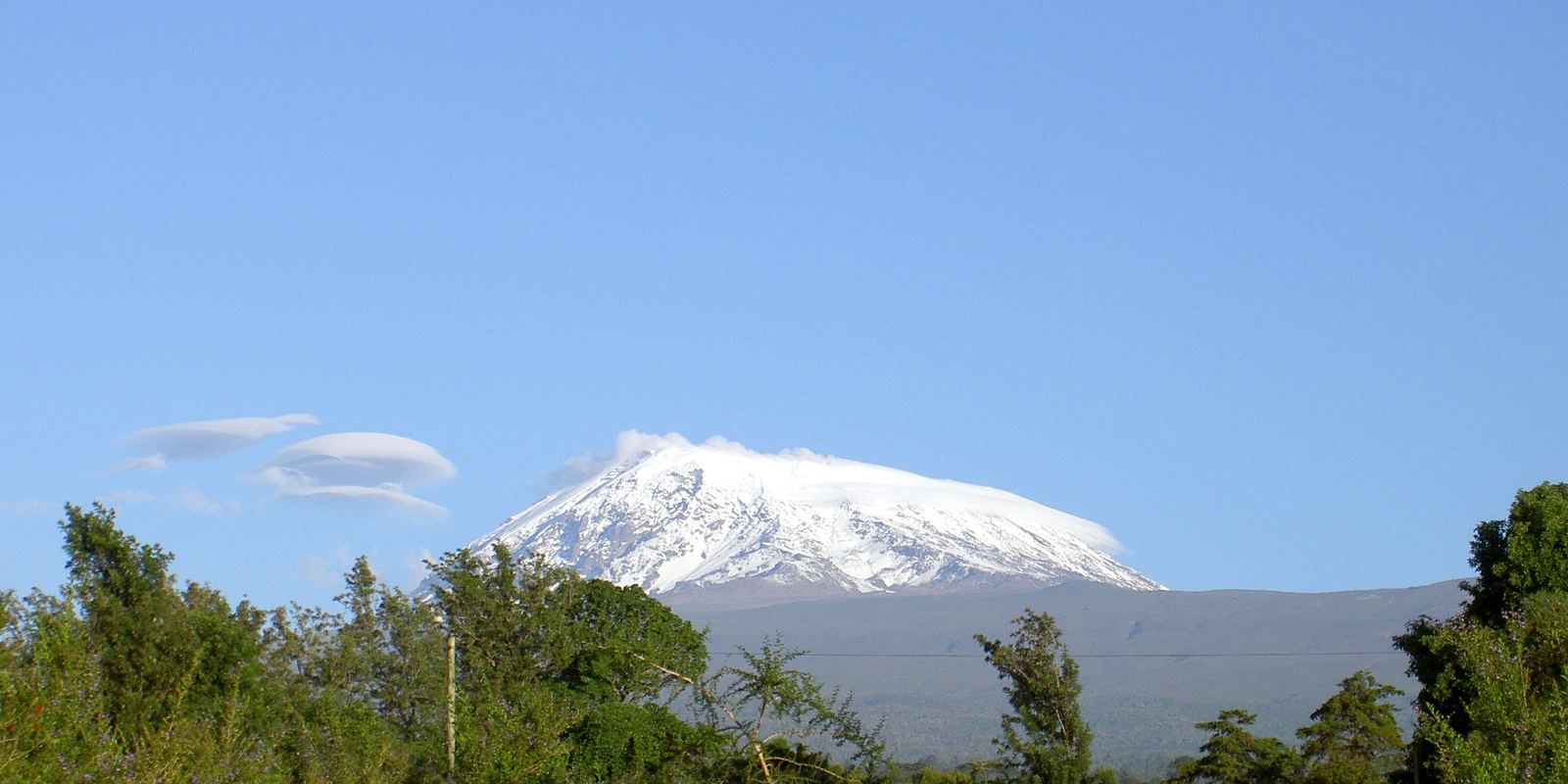
Kibo, Mount Kilimanjaro: see file page, CC BY-SA 3.0
A giant on the plains
Kilimanjaro rises from the plains of northern Tanzania to 5,895 metres at Uhuru Peak, the highest point in Africa. It is the world's tallest free-standing mountain, meaning it is not part of a range. It is made of three volcanic cones: Kibo, the highest, plus Mawenzi and Shira.
Five climate zones
Climbers pass through farmland, rainforest, heather and moorland, alpine desert and finally an arctic summit zone within a few days. The rainforest is home to colobus monkeys and many birds, while the upper slopes have giant groundsels and lobelias found almost nowhere else.
Shrinking ice
Kilimanjaro's summit glaciers have shrunk dramatically over the past century, a change scientists link to shifts in climate, including drier air. They remain one of the most famous sights in Africa.
Climbing it
The first recorded ascent was in 1889 by Hans Meyer and Ludwig Purtscheller, guided by local guide Yohani Kinyala Lauwo, who lived to a great age and became a celebrated figure. Today tens of thousands try each year. No technical climbing is needed on the main routes, but altitude sickness is the biggest risk. Routes of seven days or more give better acclimatisation and higher success rates.
Choosing a route
Popular routes include Marangu, which has huts instead of tents; Machame, known for scenery; Lemosho, a longer route with good acclimatisation; and Rongai, which approaches from the north. Summit night usually starts around midnight so climbers reach Uhuru Peak near sunrise. Good boots, warm layers, a quality sleeping bag and headlamp are essential, as summit temperatures can drop well below freezing. Tipping guides and porters is customary, and reputable operators publish their porter welfare policies.
Safety tips
Tanzania requires climbers to use licensed guides and operators. Choose operators who treat porters fairly, walk slowly, drink plenty of water and tell your guide immediately about headaches, nausea or confusion. Descending is the best cure for altitude illness.
- Kibo, Mount Kilimanjaro: see file page, CC BY-SA 3.0
Text written by Bongara Bongara.