The Serengeti and the Great Migration
Endless plains in motion. Each year more than a million wildebeest circle through Tanzania's Serengeti and Kenya's Maasai Mara. When and where to see the Great Migration.
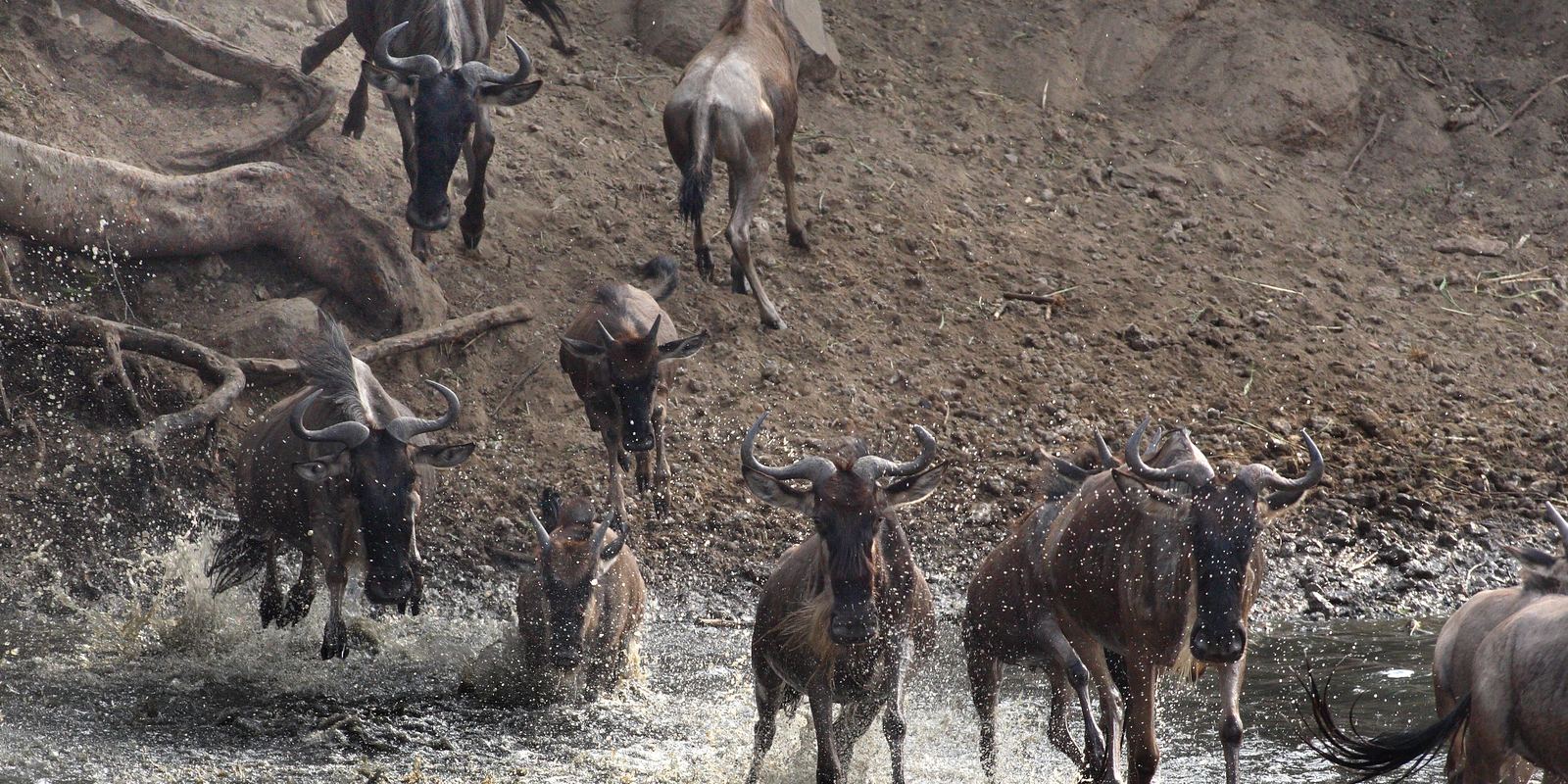
Wildebeest on the move, Serengeti: Wolves201, CC BY-SA 4.0
Endless plains
The name Serengeti is often said to come from a Maasai word meaning endless plains. Serengeti National Park in northern Tanzania covers about 14,750 square kilometres of grassland, woodland and rocky outcrops called kopjes, and it is one of the most famous wildlife areas on Earth.
The Great Migration
Every year, around 1.5 million wildebeest, joined by hundreds of thousands of zebras and gazelles, move in a huge loop following the rains and fresh grass. The herds spend the wet season on the southern plains, where hundreds of thousands of calves are born in a few weeks around February, then move north and west, reaching Kenya's Maasai Mara in the dry season before returning.
River crossings
The most dramatic moments come when herds cross the Grumeti and Mara rivers, where crocodiles wait. Crossings usually happen between about July and October, but timing varies each year with the rains. Patient guides track the herds daily.
Visiting responsibly
Choose licensed operators who follow park rules, keep distance from animals and stay on tracks. Lodges and tented camps range from simple to luxury. The park has been a UNESCO World Heritage Site since 1981, and park fees support conservation and local communities.
Planning a safari
The best time to visit depends on what you want to see. January to March is calving season in the southern Serengeti, with abundant predators. June and July often bring herds through the western corridor and the Grumeti River, while northern river crossings usually peak later in the dry season. Many visitors combine the Serengeti with the Ngorongoro Crater and Tarangire National Park. Book licensed guides and lodges early for peak months, and remember that wildlife movements are never guaranteed.
Beyond the herds
The Serengeti is also home to lions, leopards, cheetahs, elephants, giraffes and hundreds of bird species. Nearby, the Ngorongoro Crater offers another remarkable wildlife landscape.
- Wildebeest on the move, Serengeti: Wolves201, CC BY-SA 4.0
Text written by Bongara Bongara.