Injera
The spongy teff bread of Ethiopia. Injera is a soft, tangy flatbread of fermented teff from Ethiopia and Eritrea. It is plate, spoon and bread at once. Learn its story and a recipe.
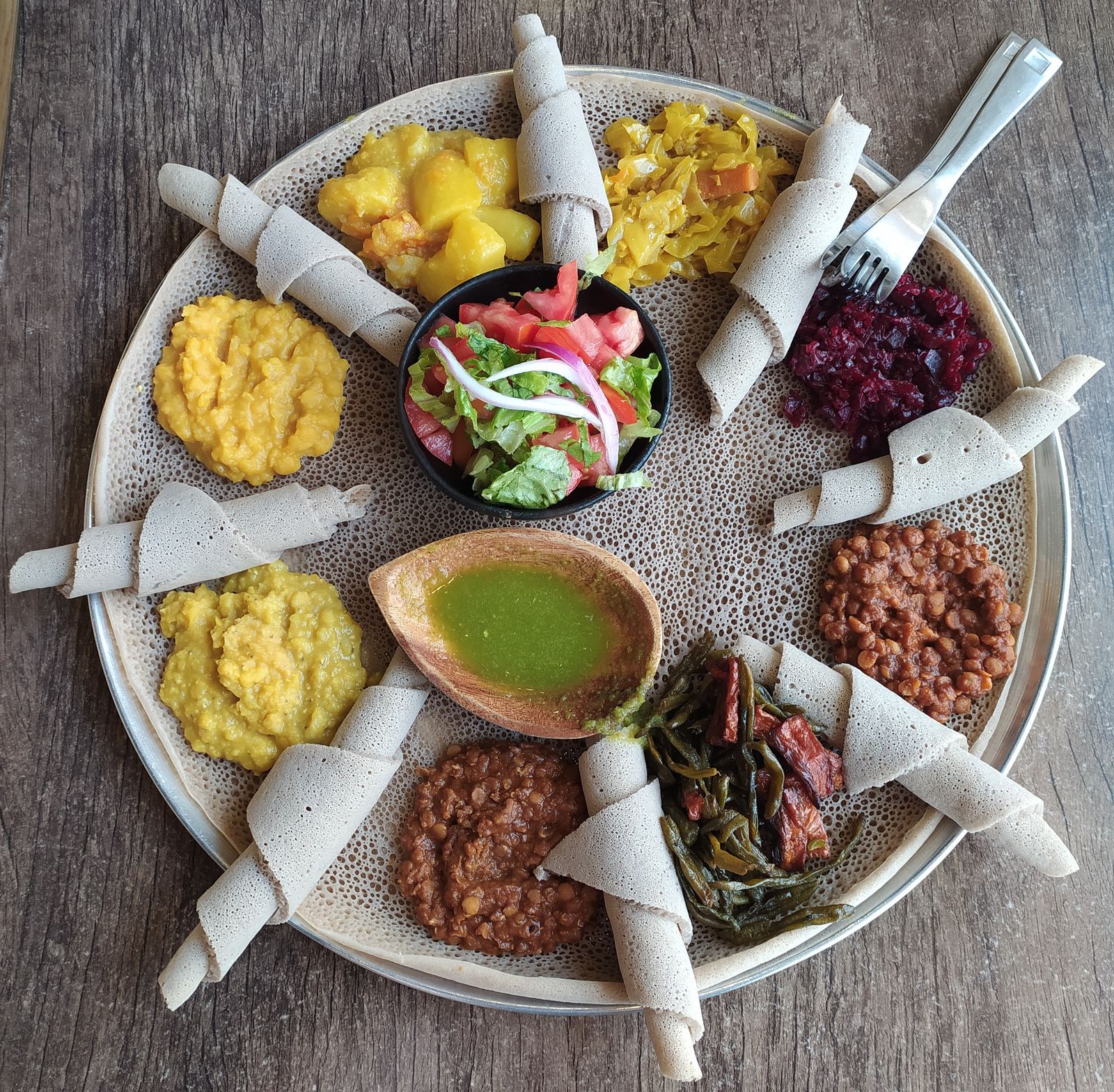
Injera with eight stews: Artem.G, CC BY-SA 4.0
A grain from the highlands
Injera begins with teff, a grass whose seeds are among the smallest grains in the world. Teff has been grown in the highlands of Ethiopia and Eritrea for thousands of years. It copes with both drought and waterlogged soil, is naturally gluten free, and is rich in iron and fibre. Farmers grow white, ivory and brown varieties, and each gives the bread a slightly different color and flavour. White teff is usually the most prized and the most expensive, while brown teff has a deeper, earthier taste. Outside the Horn of Africa, cooks often mix teff with wheat or barley flour.
Video: How To Eat Ethiopian Injera (Insider Food), embedded from YouTube.
Fermented, poured and steamed
To make injera, cooks mix teff flour with water and leave it to ferment for a few days, often using a little liquid saved from the last batch as a starter, known in Amharic as ersho. The fermentation gives injera its gentle sourness and its bubbles.
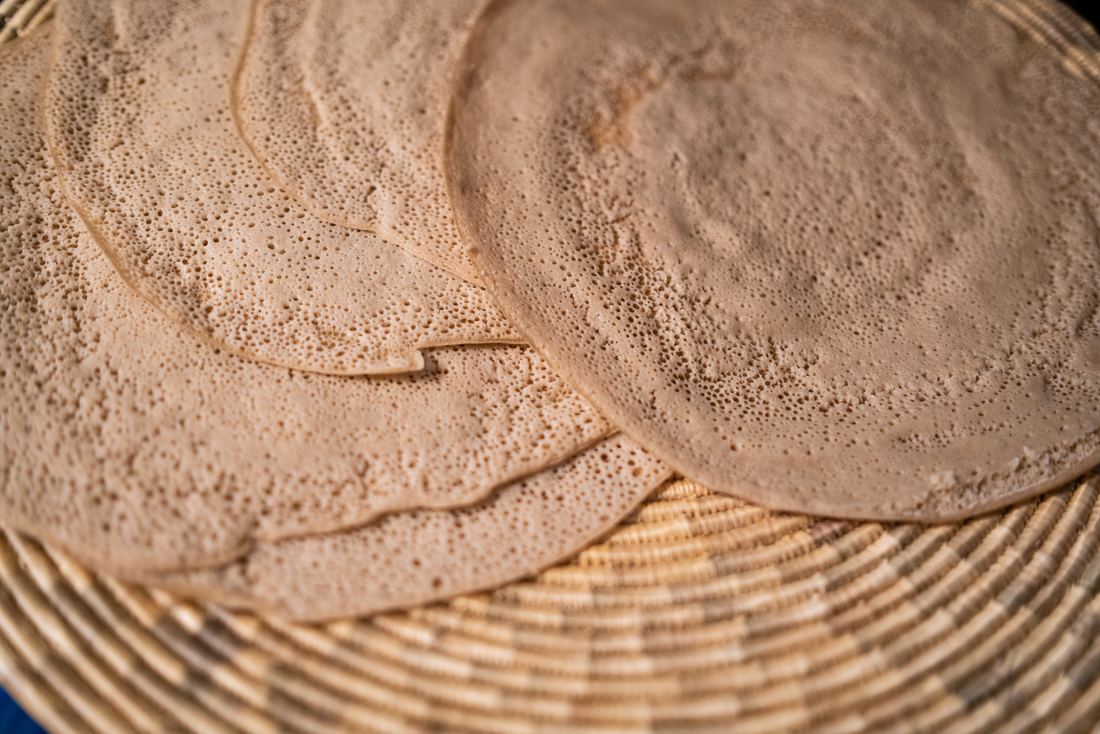
The batter is poured in a spiral onto a mitad, a large round griddle traditionally made of clay and heated by a wood fire, and now often electric. It is covered and steamed, not flipped. As it cooks, steam escapes through the surface, leaving the honeycomb of tiny holes that Ethiopians call eyes.
Plate, spoon and bread
At a meal, a large injera covers a shared tray and stews are spooned on top: doro wat, a slow-cooked chicken stew spiced with berbere; misir wat made from red lentils; shiro, a smooth chickpea stew; and greens, cabbage and salads. More rolled injera sits on the side. Diners tear off pieces with the right hand and use them to scoop up the food, and the injera underneath soaks up the sauces and is eaten last.
Sharing is part of the meal. A gesture called gursha, placing a bite directly into someone else's mouth, is a sign of affection and respect.
Fasting days and the wider world
Many Ethiopian and Eritrean Christians follow Orthodox fasting rules that exclude meat and dairy on Wednesdays, Fridays and longer seasons such as Lent. On these days injera is served with lentils, chickpeas and vegetables, which is why Ethiopian cooking has such a strong plant-based tradition. Ethiopian and Eritrean restaurants in cities around the world have made injera familiar far beyond the Horn of Africa.
Make Injera at home
Ingredients
- 2 cups (about 300 g) teff flour, brown or ivory
- 3 cups lukewarm water, unchlorinated if possible
- 1/2 tsp salt
- Oil for wiping the pan
Method
- In a large glass or ceramic bowl, whisk the teff flour with 2 1/2 cups of the water into a smooth, thin batter. Cover loosely with a cloth.
- Leave the bowl at warm room temperature for 2 to 3 days, stirring once a day. It is ready when it smells pleasantly sour and small bubbles form on top. A layer of liquid may rise; pour some of it off if you want a milder taste.
- Stir in the salt and enough of the remaining water to make a batter about as thin as crepe batter.
- Heat a large nonstick or well-seasoned pan with a lid over medium-high heat and wipe it with a little oil.
- Pour a ladle of batter in a spiral from the outside in, then tilt the pan so it covers the base thinly.
- As soon as holes appear across the surface, about 30 seconds, cover with the lid and cook for 1 to 2 minutes more, until the top looks dry and the edges lift. Do not flip it.
- Slide the injera onto a clean cloth to cool, then stack once cool so they do not stick. Serve with lentil stew, spiced chickpea shiro or sautéed greens.
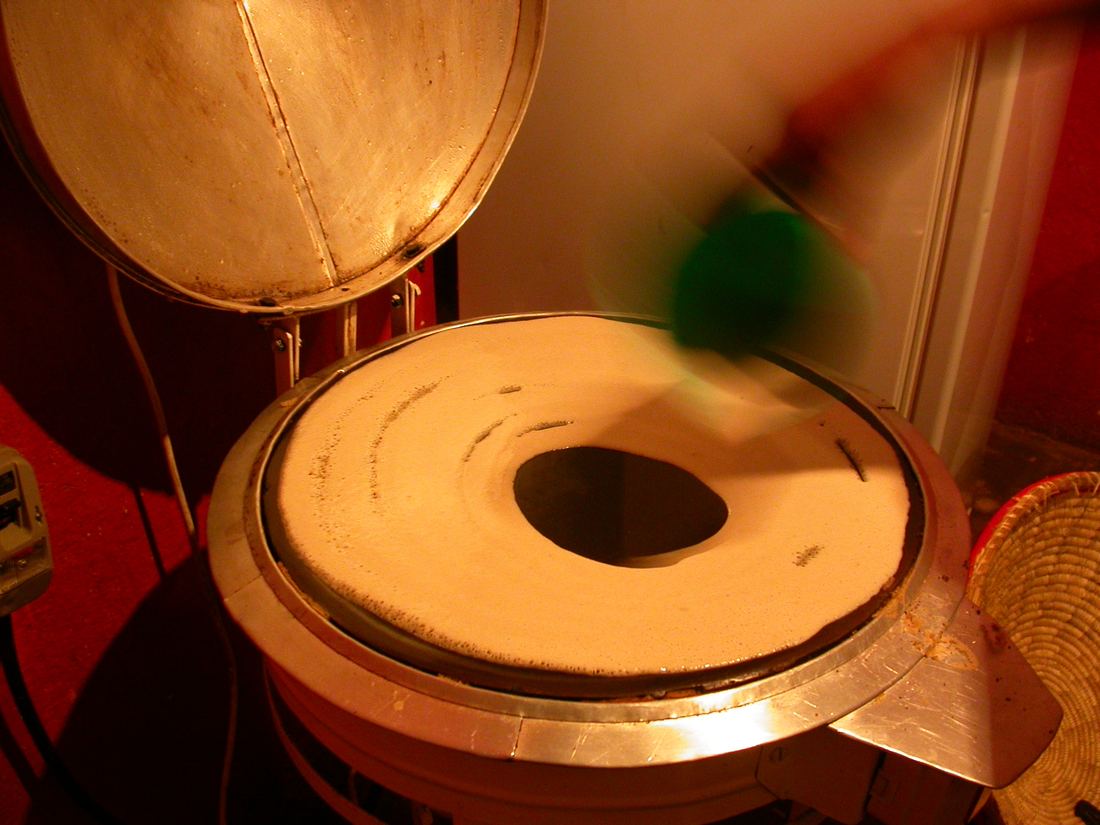
- Injera with eight stews: Artem.G, CC BY-SA 4.0
- Injera from ivory teff: Edsel Little, CC BY-SA 2.0
- Pouring the batter: Visio, CC BY-SA 4.0
Text written by Bongara Bongara.