Jollof Rice
West Africa's favourite party rice. Jollof rice is named after the Wolof Jolof Empire of Senegal and sparks a friendly rivalry across West Africa. Here is its story and a recipe.
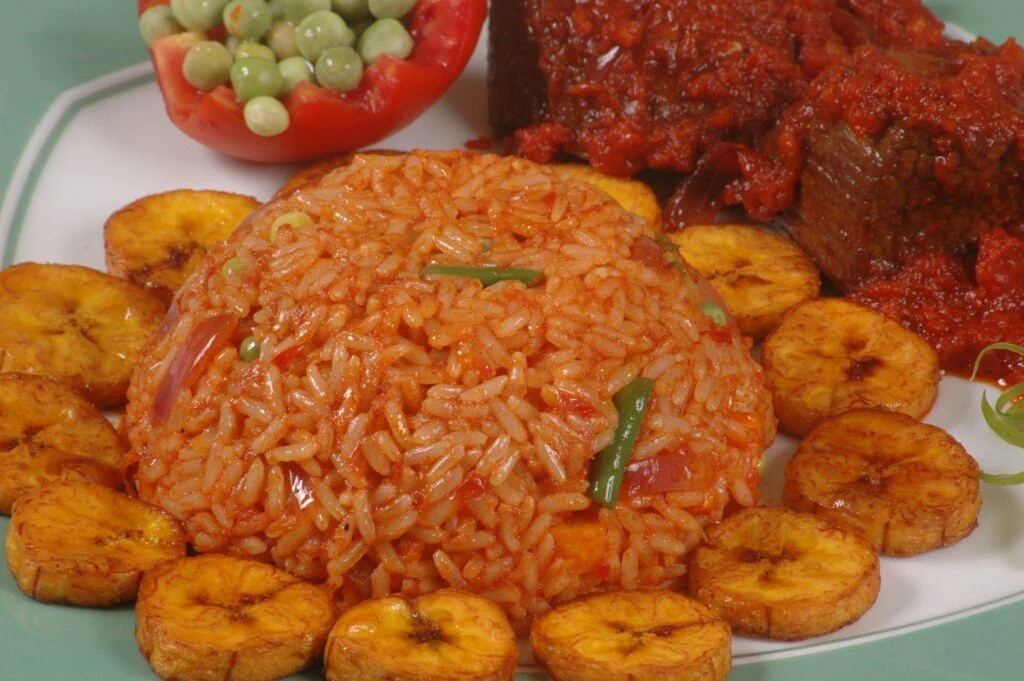
Jollof rice with fried plantain: Skarfmacaronne, CC BY-SA 4.0
A dish named after an empire
Jollof rice takes its name from the Jolof, or Wolof, Empire, which ruled much of what is now Senegal from about the mid-14th century until it broke apart in the 16th. The Wolof people of the region cooked rice in a rich sauce with fish and vegetables. That dish, thieboudienne, often written ceebu jen, is still the national dish of Senegal, and UNESCO recognised it as intangible cultural heritage in 2021.
As people, traders and recipes moved along the coast, the idea of rice cooked in a seasoned tomato and pepper base spread across West Africa. Each country made it its own, and the name of the Wolof empire travelled with it.
Video: How to Make Jollof Rice | NYT Cooking (NYT Cooking), embedded from YouTube.
Jollof rice is named after an old West African empire
Jollof rice takes its name from the Wolof (Jolof) Empire of Senegambia; Senegal's thieboudienne is often called its ancestor, and fans mark World Jollof Rice Day on August 22.
YouTube @BongaraBongara (launching soon). Photos in this Short: Jollof rice with vegetable.jpg - Segun Famisa (CC BY-SA 4.0) via Wikimedia Commons | Ghana Jollof Rice with Chicken.jpg - Queen Murja10 (CC BY-SA 4.0) via Wikimedia Commons | A Nigeria Jollof Rice with chicken.jpg - Ei'eke (CC BY-SA 4.0) via Wikimedia Commons | Jollof rice and plantain.jpg - Lyndadelz (CC BY-SA 4.0) via Wikimedia Commons | Thieboudienne.JPG - KVDP (Public domain) via Wikimedia Commons | Ceebu Jen, Senegalese dish.jpg - Alweaver2 (CC BY-SA 4.0) via Wikimedia Commons | Jollof Rice
The friendly rivalry
Ask who makes the best jollof and you will start an argument. Nigerians and Ghanaians in particular have spent years trading jokes, social media posts and cook-off challenges over it, and Senegalese, Gambians, Liberians, Sierra Leoneans and Cameroonians all defend their own versions. The rivalry is affectionate, a way of celebrating a shared dish rather than a real dispute.
The differences are real, though. Nigerian jollof often uses parboiled long-grain rice, bay leaves, thyme and curry powder. Ghanaian jollof usually uses fragrant jasmine or basmati rice and may be spicier, often served with shito, a black pepper sauce. Senegalese versions stay closer to thieboudienne.
Party jollof and the bottom of the pot
In Nigeria, the most loved style is party jollof, cooked in huge pots over firewood at weddings and celebrations. The smoke and the slightly scorched layer at the base of the pot give it a flavour that many cooks try to copy at home by turning up the heat at the end.
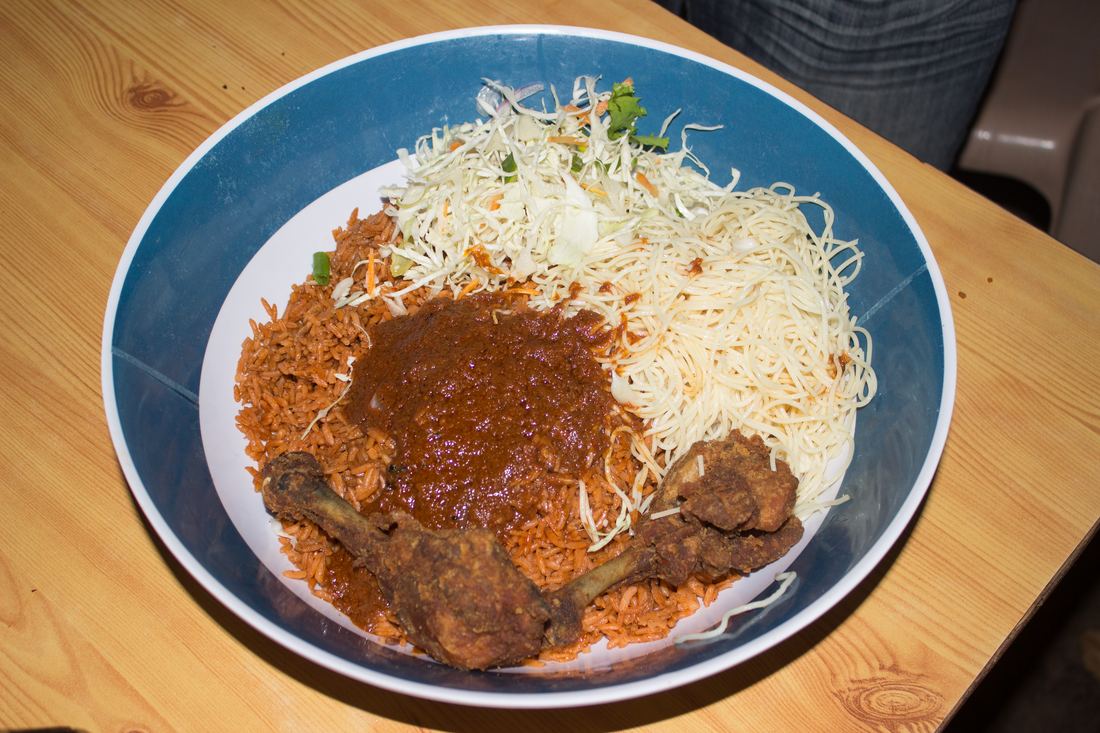
Jollof is usually served with fried plantain, coleslaw or salad, and grilled or fried chicken, beef or fish. Fans around the world mark World Jollof Day on 22 August.
Tips for a good pot
The secret of jollof is the base. Cooks reduce the blended tomatoes and peppers until they lose their raw, watery taste, and fry the tomato paste until it darkens. Washing the rice removes surface starch so the grains stay separate. Once the rice goes in, the pot is sealed tightly and left alone on low heat, because stirring breaks the grains and makes the rice mushy.
Measuring the liquid takes practice. Too much and the rice turns soft; too little and the top stays hard while the base burns. Many cooks add stock in stages, sprinkling a little more over any undercooked grains near the end.
Make Jollof Rice at home
Ingredients
- 3 cups (about 600 g) long-grain parboiled rice, or basmati
- 4 ripe plum tomatoes
- 2 red bell peppers, seeded
- 1 to 2 scotch bonnet peppers, to taste
- 2 medium onions
- 1/3 cup vegetable oil
- 3 tbsp tomato paste
- 2 bay leaves
- 1 tsp dried thyme
- 1 tsp curry powder
- 3 cups chicken or vegetable stock
- 1 stock cube, crumbled (optional)
- Salt to taste
- 1 tbsp butter (optional)
Method
- Blend the tomatoes, bell peppers, scotch bonnet and one onion into a smooth purée. Simmer it in a pot for 15 to 20 minutes until reduced by about a third.
- Rinse the rice in cool water until the water runs mostly clear, then drain well.
- Slice the second onion. Heat the oil in a heavy pot over medium heat and fry the onion until soft and golden.
- Stir in the tomato paste and fry for 3 to 4 minutes, stirring, until it darkens and loses its raw taste.
- Add the reduced purée, bay leaves, thyme, curry powder and stock cube. Cook for about 10 minutes until the oil starts to rise to the top.
- Add the stock and season with salt. The liquid should taste a little saltier than you want the final rice.
- Stir in the rice so it sits just under the liquid. Cover with foil and then the lid, turn the heat to low and steam for 25 to 30 minutes, without stirring, until the liquid is absorbed and the rice is tender.
- For the smoky party flavour, raise the heat for the last 3 to 5 minutes so the bottom toasts slightly. Add the butter, fluff with a fork and rest for 5 minutes before serving with fried plantain, salad or grilled chicken.
- Jollof rice with fried plantain: Skarfmacaronne, CC BY-SA 4.0
- Jollof with chicken: DromoTetteh, CC BY-SA 4.0
- Short photos: Jollof rice with vegetable.jpg - Segun Famisa (CC BY-SA 4.0) via Wikimedia Commons | Ghana Jollof Rice with Chicken.jpg - Queen Murja10 (CC BY-SA 4.0) via Wikimedia Commons | A Nigeria Jollof Rice with chicken.jpg - Ei'eke (CC BY-SA 4.0) via Wikimedia Commons | Jollof rice and plantain.jpg - Lyndadelz (CC BY-SA 4.0) via Wikimedia Commons | Thieboudienne.JPG - KVDP (Public domain) via Wikimedia Commons | Ceebu Jen, Senegalese dish.jpg - Alweaver2 (CC BY-SA 4.0) via Wikimedia Commons | Jollof Rice Ghana.jpg - Fquasie (CC BY-SA 4.0) via Wikimedia Commons | Jollof rice and tomato stew.jpg - Maame1Yaa (CC BY-SA 4.0) via Wikimedia Commons
Text written by Bongara Bongara.