Kente Cloth
Ghana's woven strips of meaning. Kente is woven by Asante and Ewe weavers in Ghana on narrow looms, in strips about a hand wide that are sewn together into bold cloths.
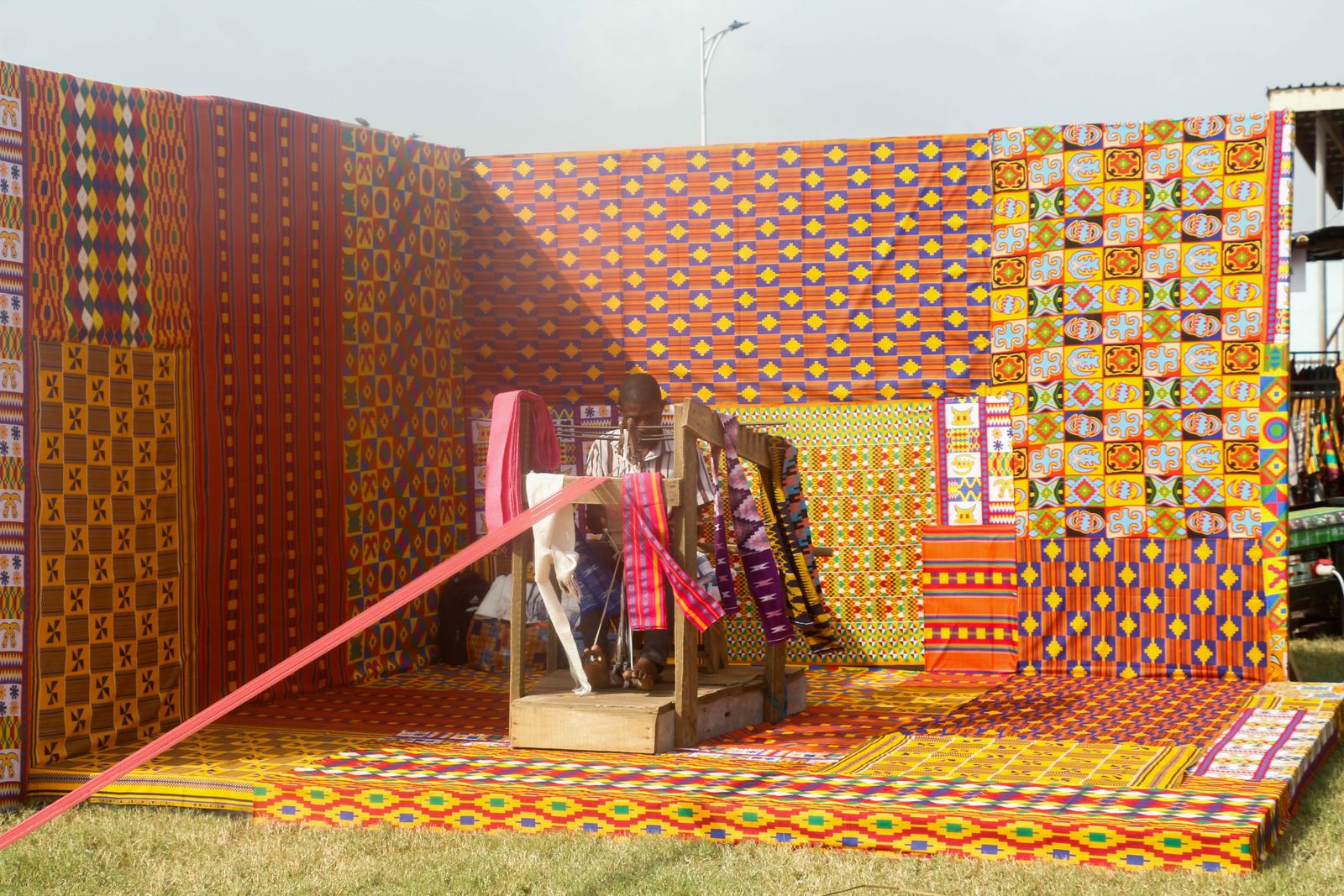
Kente weaving in Ghana: Fquasie, CC BY-SA 4.0
Woven a hand's width at a time
Kente is not woven as one large cloth. It is made in long strips about 10 centimetres wide, roughly the width of a hand, on a narrow treadle loom. The weaver works the pedals with the feet to lift sets of warp threads and passes the shuttle with the hands, building patterns block by block. When enough strips are finished, they are laid side by side and sewn edge to edge, so the blocks line up into the bold checkerboard designs kente is known for.
A full cloth for a man, worn wrapped around the body like a toga, may need around two dozen strips, and a finely patterned one can take weeks or months to weave.
Video: Kente Weaving - Our Talking Hands - Peace Corps Ghana (Peace Corps Ghana), embedded from YouTube.
Kente cloth is woven in strips as wide as your hand
Kente from Ghana is woven by Asante and Ewe weavers in narrow strips that are sewn together into a full cloth; its colours carry meanings such as gold for royalty and green for growth.
YouTube @BongaraBongara (launching soon). Photos in this Short: Different Kente cloth, Tafi, Volta region.jpg - Warmglow (CC0) via Wikimedia Commons | Ewe kente 2, Ghana.JPG - ZSM (CC BY-SA 3.0) via Wikimedia Commons | Kente Cloth making.jpg - Lauren Gardenbelle Fritts (CC BY-SA 2.0) via Wikimedia Commons | Kente weaving 06.jpg - daSupremo (CC BY-SA 4.0) via Wikimedia Commons | Kente weaver in a loom.jpg - Kwameghana(Bright Kwame Ayisi) (CC BY-SA 4.0) via Wikimedia Commons | A kente weaver working in a loom.jpg - Kwameghana(Bright Kwame Ayisi) (CC BY-SA 4.0)
Asante and Ewe traditions
Two peoples of Ghana are famous for kente. Among the Asante, the craft is centred on towns such as Bonwire, near Kumasi. Asante tradition tells of two weavers who learned their art by watching Ananse the spider spin its web. Kente became closely tied to the Asante royal court, and certain patterns were once reserved for the Asantehene, the king.
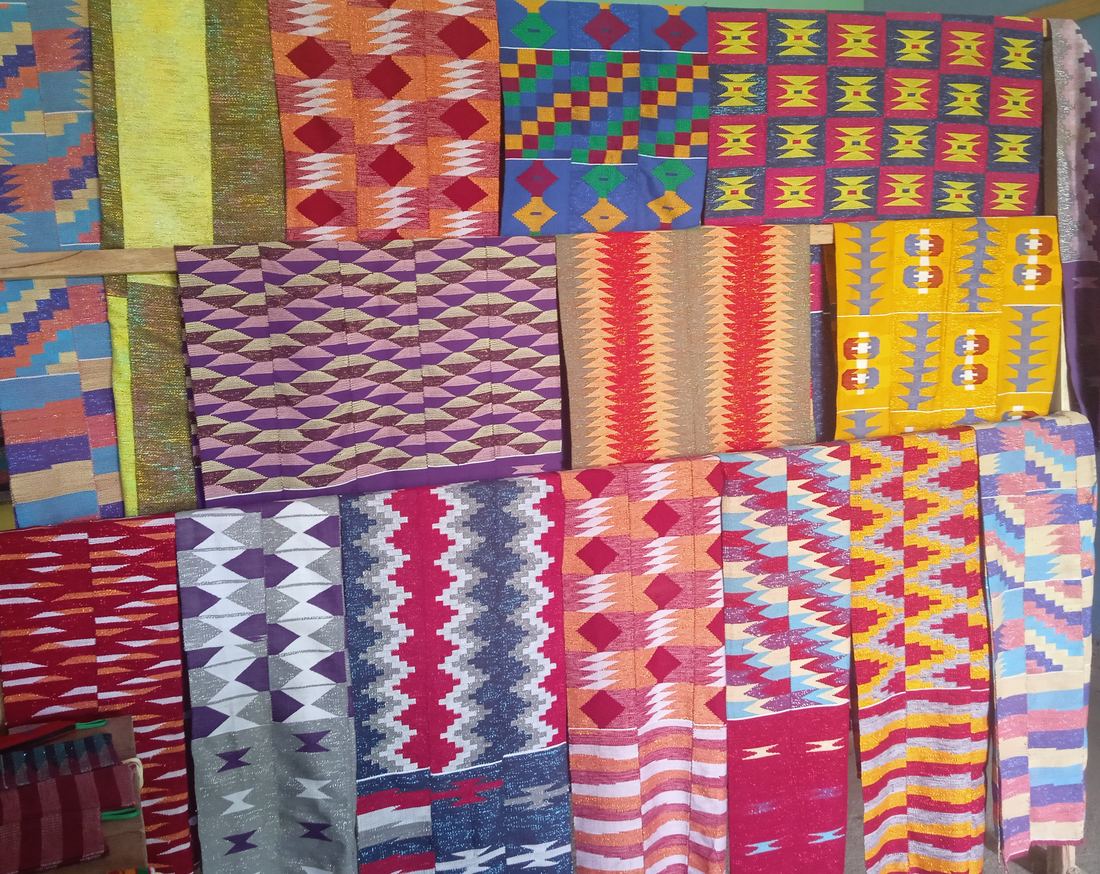
The Ewe of the Volta Region, and across the border in Togo, have their own long weaving tradition, centred on places such as Agotime Kpetoe, which holds an annual kente festival. Ewe cloths often include small woven figures such as animals, hands and everyday objects alongside geometric patterns.
Colors and names
Each kente pattern has a name, and many carry proverbs or commemorate people and events. Colors carry meaning too. Gold is linked with wealth and royalty, green with growth and harvest, red with sacrifice and struggle, and black with maturity and the ancestors. Wearing a particular cloth can send a message about the wearer and the occasion. Weavers in Bonwire still keep a pattern called Oyokoman, named after the Oyoko clan to which the Asante royal family belongs, and new designs are created and named for modern events and public figures.
Kente today
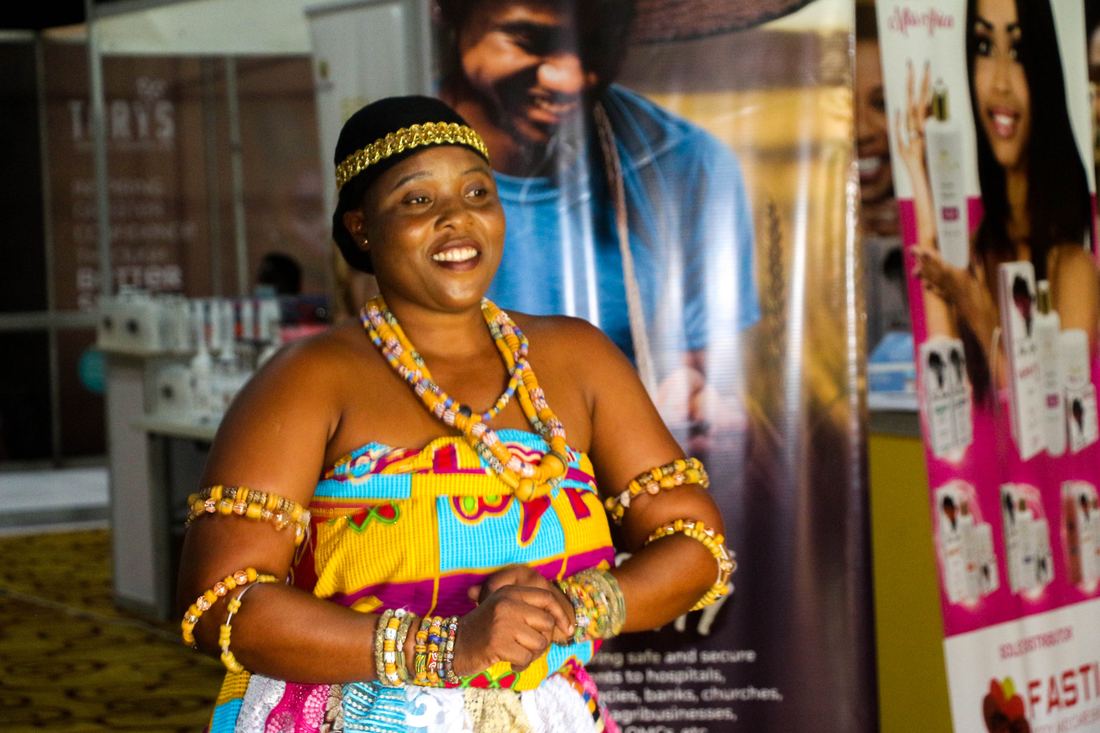
Ghanaians wear kente at weddings, funerals, festivals, church services and graduations, and political leaders wear it on state occasions. Across the African diaspora, kente stoles mark graduations and kente patterns appear on everything from fashion to book covers. Many of these are printed copies; the handwoven cloth from Ghana's weaving towns remains a skilled and valuable craft passed down within families.
- Kente weaving in Ghana: Fquasie, CC BY-SA 4.0
- Ewe kente from the Volta Region: Warmglow, CC0
- Kente worn for a celebration: Pambelle12, CC BY-SA 4.0
- Short photos: Different Kente cloth, Tafi, Volta region.jpg - Warmglow (CC0) via Wikimedia Commons | Ewe kente 2, Ghana.JPG - ZSM (CC BY-SA 3.0) via Wikimedia Commons | Kente Cloth making.jpg - Lauren Gardenbelle Fritts (CC BY-SA 2.0) via Wikimedia Commons | Kente weaving 06.jpg - daSupremo (CC BY-SA 4.0) via Wikimedia Commons | Kente weaver in a loom.jpg - Kwameghana(Bright Kwame Ayisi) (CC BY-SA 4.0) via Wikimedia Commons | A kente weaver working in a loom.jpg - Kwameghana(Bright Kwame Ayisi) (CC BY-SA 4.0) via Wikimedia Commons | Bonwire man weaving.jpg - Sadads (CC BY-SA 4.0) via Wikimedia Commons | Kente patterns, Tafi, Volta region.jpg - Warmglow (CC0) via Wikimedia Commons
Text written by Bongara Bongara.